
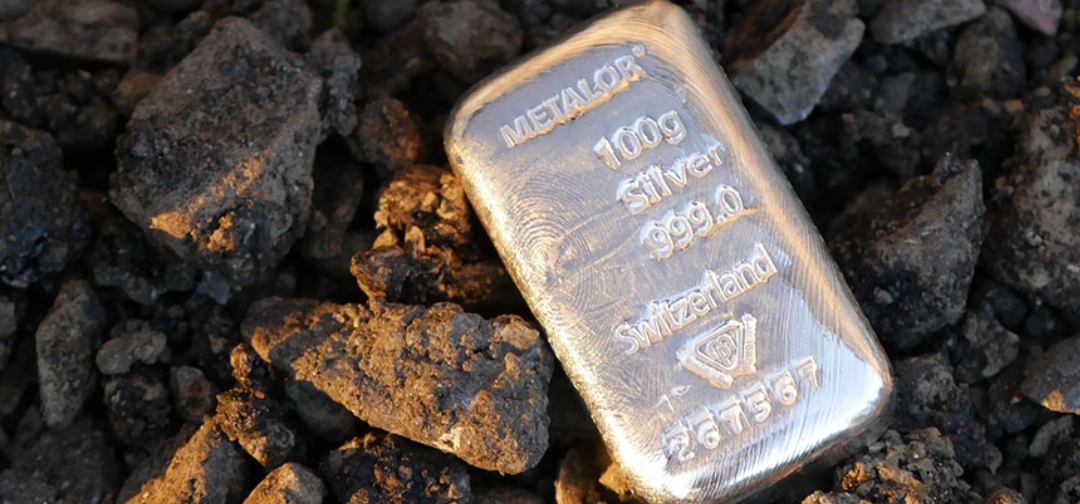
Silver has quietly crossed a major milestone and become the second most valuable asset.
According to the latest CompaniesMarketCap rankings, silver has overtaken some of the world’s largest asset classes, including major technology giants, to become the second most valuable asset in the world by total market capitalisation.
With spot silver now valued at over $5.3 trillion USD, only gold sits above it.
This isn’t just a headline-grabbing statistic. It reflects a profound shift in how silver is being valued by global markets, and it carries important implications for investors, stackers, and anyone thinking seriously about diversification.
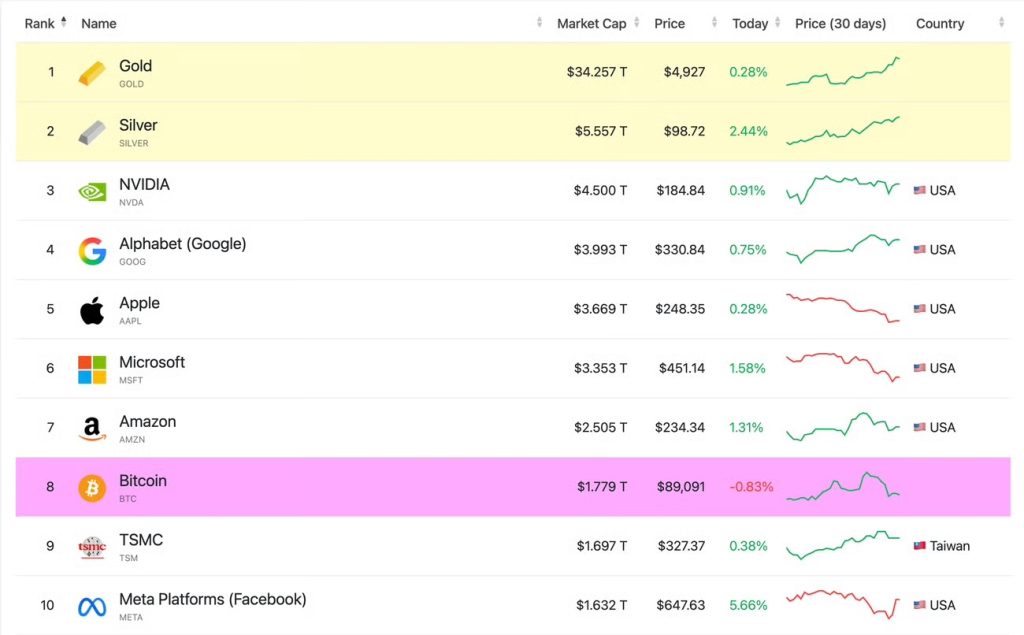
[Source: https://www.companiesmarketcap.com/assets-by-market-cap/]
What Silver’s Market Capitalisation Tells Us
Market capitalisation is the total value of an asset class, calculated by multiplying the current price by the total quantity outstanding.
In silver’s case, this means its global above-ground supply, priced at today’s market rate.
Climbing into second place globally is significant because it shows that silver’s recent price strength is not isolated or speculative. Instead, it highlights how rapidly investor demand and valuation have accelerated relative to other major assets — including equities, cryptocurrencies, and broad stock market indices.
Silver is no longer being priced like a fringe commodity. It is being valued on a scale comparable to the largest and most influential sectors in the global economy.
Read 'Silver’s Strong Start to 2026: What’s Driving the Rally?'
Why Silver’s Market Capitalisation Has Grown So Rapidly
Silver’s growing market capitalisation reflects more than just price momentum. It is the result of several long-term forces aligning at once.
1. Sustained Price Appreciation
Over recent months and quarters, silver prices have surged sharply. This has naturally lifted the metal’s total valuation, but the price action itself has been supported by underlying fundamentals rather than short-term speculation alone.
2. Renewed Investment Demand
Silver is increasingly recognised as a serious investment asset, not just an industrial input. As inflation concerns persist and confidence in traditional financial systems wavers, more investors are allocating to tangible assets with intrinsic value.
This has brought silver back into mainstream portfolio discussions, alongside gold rather than beneath it.
3. Industrial and Monetary Dual Demand
Unlike many assets, silver occupies a unique position.
It is both:
- A precious metal and store of value
- A critical industrial metal, essential to electronics, energy infrastructure, and emerging technologies
This dual role underpins consistent demand and reinforces silver’s relevance in both economic growth and financial stress.
Read 'How Silver’s Industrial Demand is Driving Its Value Up'
What This Means for Physical Silver Holders
For physical silver stackers and long-term holders, this milestone is less about validation and more about confirmation.
Silver’s ranking reflects that silver is not a niche play. It is a globally significant asset class, valued alongside the world’s largest financial markets.
As silver’s market capitalisation grows, it also strengthens the case for physical ownership:
- Greater recognition increases liquidity
- Larger market size supports long-term credibility
- Broader participation reduces reliance on narrow speculative demand
In other words, silver is being treated less like a commodity trade and more like a core asset.
Silver’s Role as a Diversifying Asset Class
One of the most important implications of silver’s rise is what it says about diversification.
Silver does not simply track equities, bonds, or currencies. While it can move alongside risk assets at times, it has historically shown the ability to behave independently, particularly during periods of macroeconomic stress.
As silver’s valuation grows, its role in diversified portfolios becomes clearer:
- It can act as an inflation-resistant asset
- It provides exposure outside the financial system
- It offers liquidity without dependence on corporate earnings or debt markets
This independence is precisely why silver is increasingly being viewed as an investable asset class, rather than a supporting commodity.
Read 'Diversifying Your Investment Portfolio with Precious Metals'
A More Liquid, Investable Market
A market capitalisation of over $5.3 trillion also reinforces silver’s liquidity.
Large, deep markets tend to attract institutional participation, broader investor confidence and a more stable long-term price discovery
This does not eliminate volatility, silver remains a dynamic and sometimes fast-moving market, but it does support the idea that silver is now firmly embedded within global asset allocation frameworks.

Putting the Milestone in Perspective
Silver becoming the second most valuable asset in the world does not mean prices will rise in a straight line. Corrections and consolidation are a normal part of any strong market.
What this milestone does show is that silver’s role is evolving.
It is no longer viewed purely as a tactical trade or an industrial by-product. Instead, it is increasingly recognised as:
- A store of value
- A strategic diversifier
- A globally liquid asset with real-world utility
For long-term physical investors, this is less about chasing performance and more about understanding why silver’s relevance continues to grow.
Here to Help
Silver’s rise to become the world’s second most valuable asset marks a meaningful shift in global market perception.
It reflects rising demand, expanding recognition, and a growing appreciation of silver’s unique position at the intersection of industry, investment, and monetary history.
At Bleyer, we believe understanding these developments is just as important as tracking prices. Markets change, narratives evolve, but sound investment decisions are built on clarity, not noise.
If you’d like to discuss silver’s role in your portfolio or explore physical silver ownership, our experienced team is always happy to help.